SciCom Class of 2025
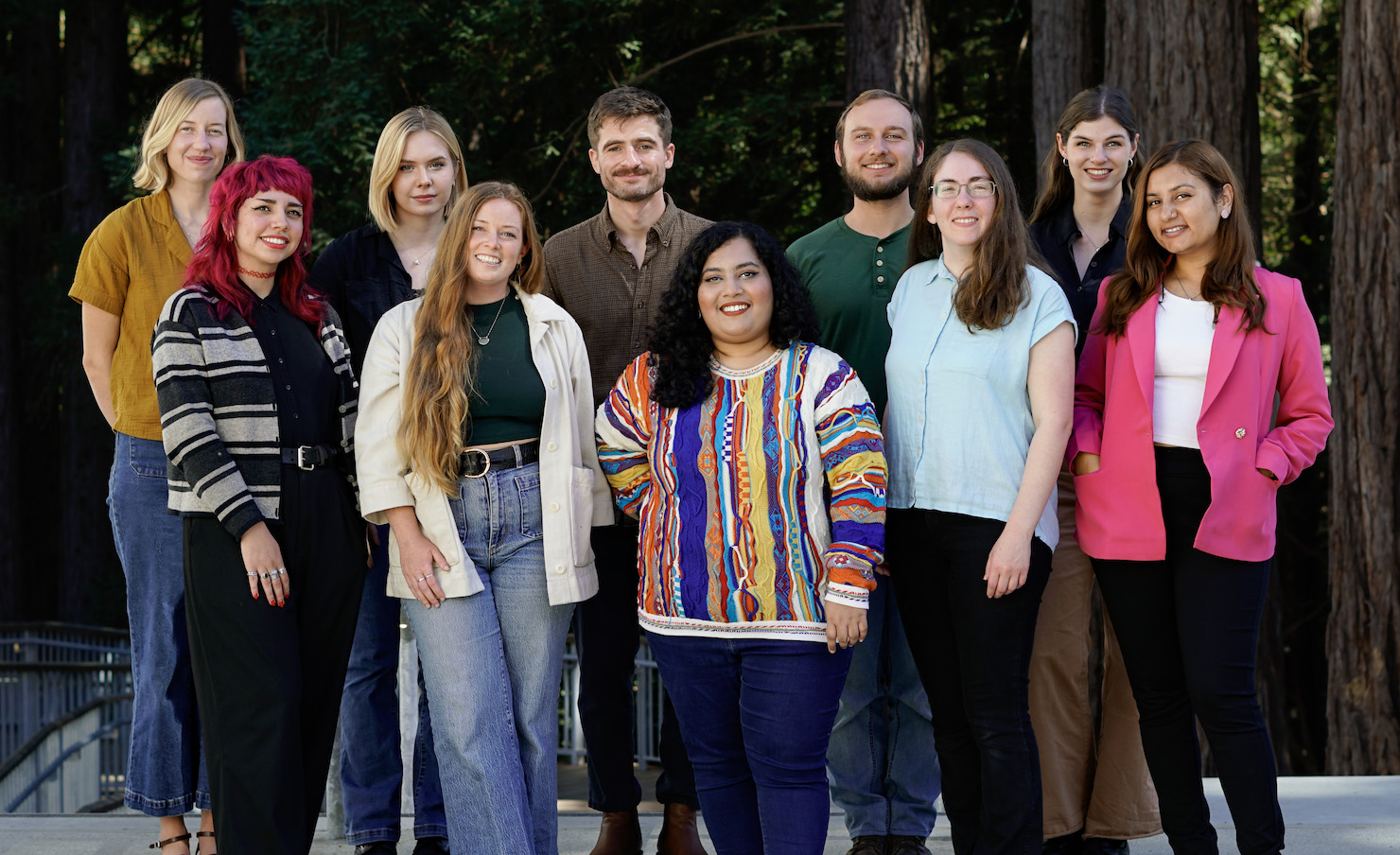
The SciCom Class of 2025 in September 2024 outside of our new building at Kresge College (l-r): Anna FitzGerald Guth, Jasmin Galvan, Jenna Ahart, Carly Kay, Collin Blinder, Farah Aziz Annesha, Mark DeGraff, Rita Aksenfeld, Caroline Hemphill, Mahima Samraik. All photos on this page by Emily Harwitz '21.
Jenna Ahart
B.A. (journalism and mass communication; minor in astronomy and astrophysics) George Washington University
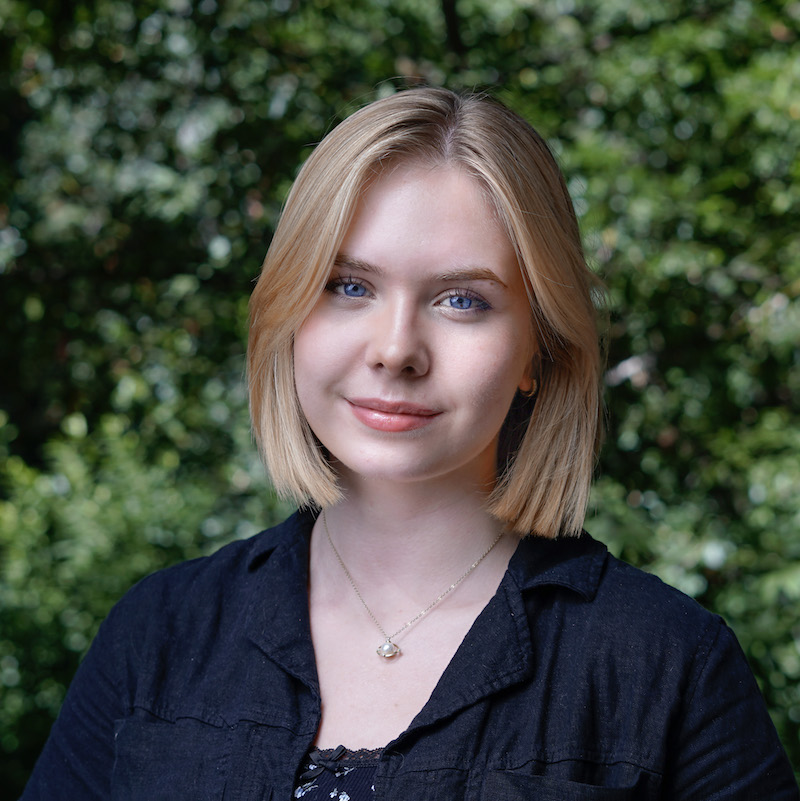
I didn't learn to love math until I took physics. As I launched toy cars down ramps for a high-school kinematics lab, equations I'd always considered abstract began to spark to life.
Since then, I've sifted out math's everyday impact wherever I can—only to discover it's everywhere. In undergraduate astrophysics classes, I found it fusing life's building blocks in the cores of stars. While writing at NASA, I found it ringing throughout the unseen fourth dimension in gravitational waves.
I've met many people who think they'll never use math in real life. As a science communicator, I'm determined to show that even if you don't study math or physics, there's no escaping it. The language of physics is our universe's most ancient tongue, and I'm eager to make it more decipherable.
School-year internships: MIT Technology Review, symmetry magazine, Science
Summer-fall internship: Nature
Website: jennaahart.com
Rita Aksenfeld
B.S. (chemistry; minor in biology) California Institute of Technology
M.S. (chemistry; chemical biology specialization) University of California, Los Angeles 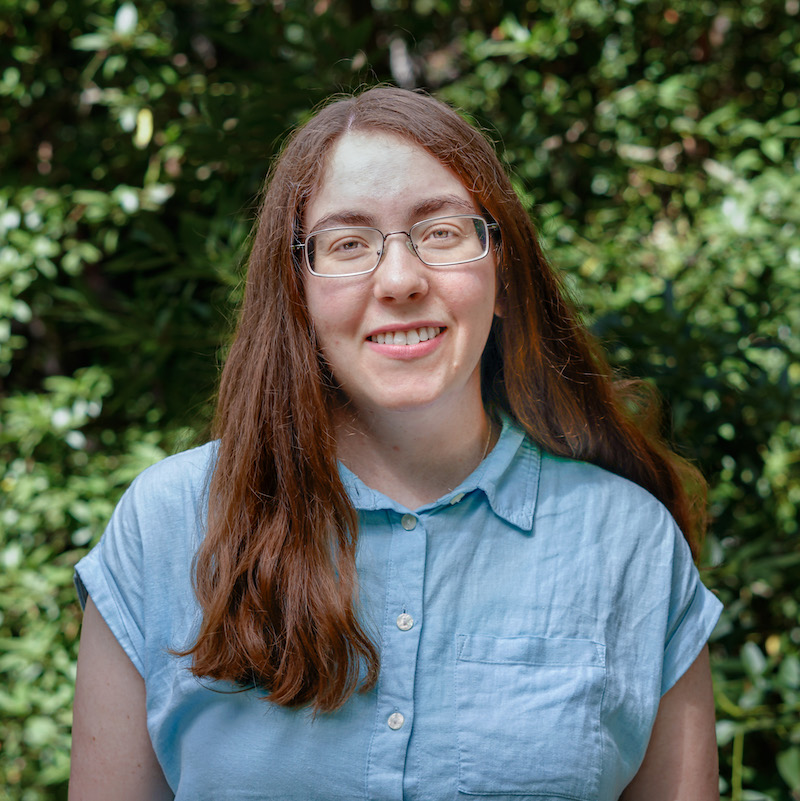
My curiosity about the world drove me to a career in science; my love for puzzles led me to work in the interdisciplinary field of chemical biology. However, I realized that the most fulfilling part of my work in graduate school was sharing science with others. In fact, it was the look of excitement on someone's face when they understood something they previously thought incomprehensible.
As a science communicator, I want to make science accessible to people who felt excluded from it in the past. Plenty of adults find science boring or too challenging, and many have trouble accessing it from traditional sources because of disabilities. I want to use multimedia communications to connect with people who found science unapproachable and show them that they can follow their curiosity too.
School-year internships: Santa Cruz Sentinel, Seymour Marine Discovery Center, Nature
Summer internship: Retraction Watch
Website: ritaaksenfeld.com
Farah Aziz Annesha
B.S. (life science & biotechnology) and B.A. (comparative literature & culture) Underwood International College, Yonsei University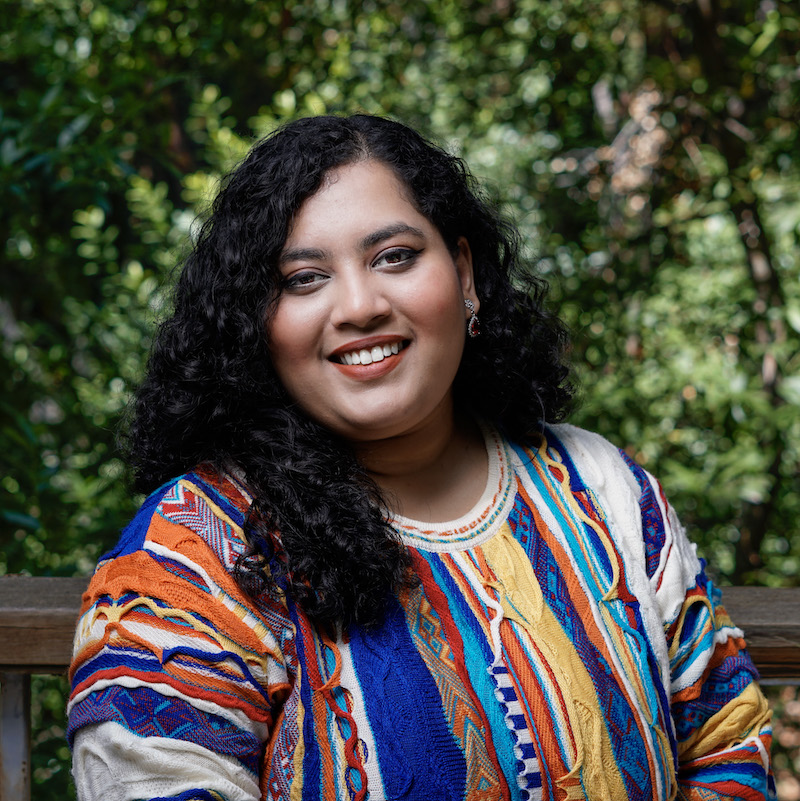
"Why can't I smell or taste anything?" My sister's question, asked dejectedly after she tested positive for Covid, propelled me to find answers. I was also sick with Covid, so reading research papers was out of the question. Then, by luck (or perhaps destiny), I found a well-written article explaining Covid anosmia: the loss of smell caused by the coronavirus. That is how I first learned about science writing.
It is the best of both worlds for me. I have a background in science and an intense passion for writing. Through science writing, I can break the age-old stereotype in my country, Bangladesh: "Science can only be understood by scientists and doctors."
But why should science be limited to people in STEM? Why should families force their children to become doctors and scientists just so they can help make medical decisions for the family? I aspire to change this culture and make science accessible to everyone in my community.
School-year internships: Monterey Herald, Stanford News Service
Website: farahazizannesha.com
Collin Blinder
B.A. (psychology; minor in computer science) Pitzer College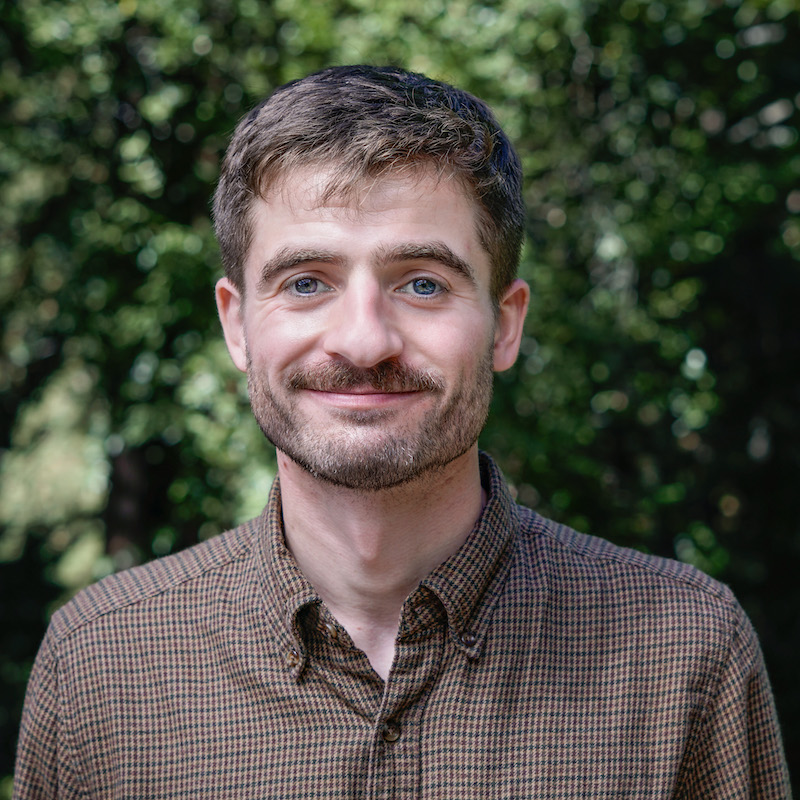
As a child, I'd launch endless questions at any adult I could corner, especially those who knew something about science. I badly wanted to see the world through their eyes, see electricity dancing through wires, viruses surfing around on sneezes, and seething biodiversity in a handful of dirt.
When I finally began working in a lab, I realized that experiments can't speak for themselves. Science needs storytellers to inspire and inform. My calling is to tell the story of science in all its breathtaking strangeness—sharing discoveries with those who don’t have the time or resources to explore a laboratory or symposium.
Whether covering local wildlife or discoveries from deep space, I aim to find the most accessible way to communicate complex topics, so that anyone can see through the eyes of a scientist.
School-year internships: Stanford Linear Accelerator Center, Science, UC Santa Cruz news office
Summer internship: CZI Biohub
Website: collinblinder.com
Mark DeGraff
B.S.A. (biology) University of Texas at Austin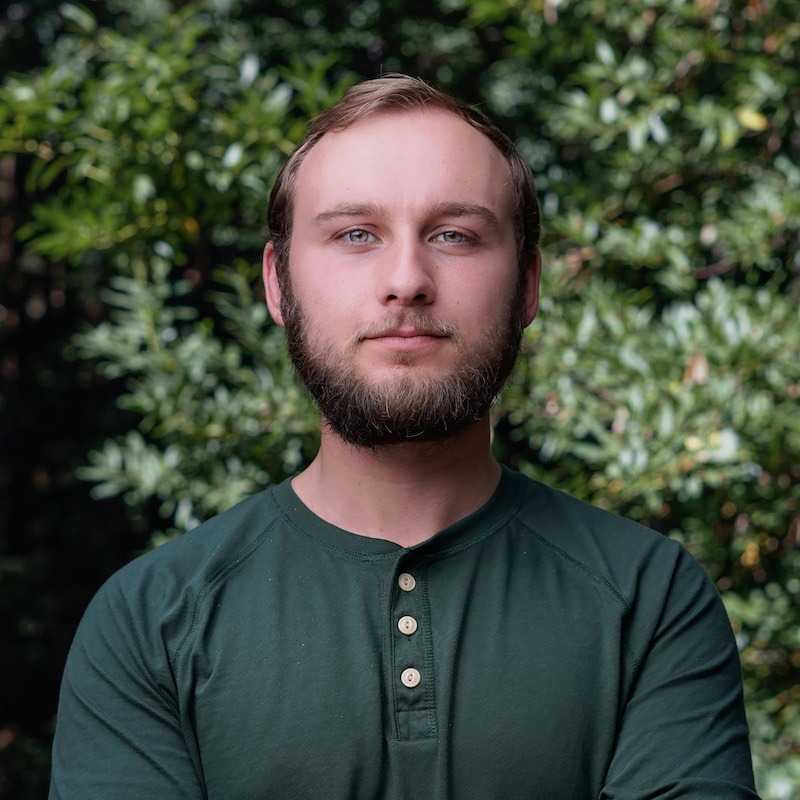 I have always used scientific knowledge as a source of amazement and a powerful problem-solving tool. As a kid growing up in northern California, I studied ecology to learn more about what made our redwood forests so special. As a young adult, I was a backcountry guide in the northern Rocky Mountains, where I studied geology to better understand how the incredible landscape around me formed. Later on, when a serious injury took me away from the work I loved and left me with years of chronic pain, I studied kinesiology to find the root of that pain and get better.
My understanding of scientific research has had a transformative impact on my life. I have chosen to become a science communicator so that I can share the life-changing applications of scientific research with others.
School-year internships: Monterey Herald, UC Santa Cruz news office, Eos
Website: markdegraff.com
Jasmin Galvan
B.S. (physiology and neuroscience; minor in photography) University of California, San Diego
MSc (music, mind, and brain) Goldsmiths, University of London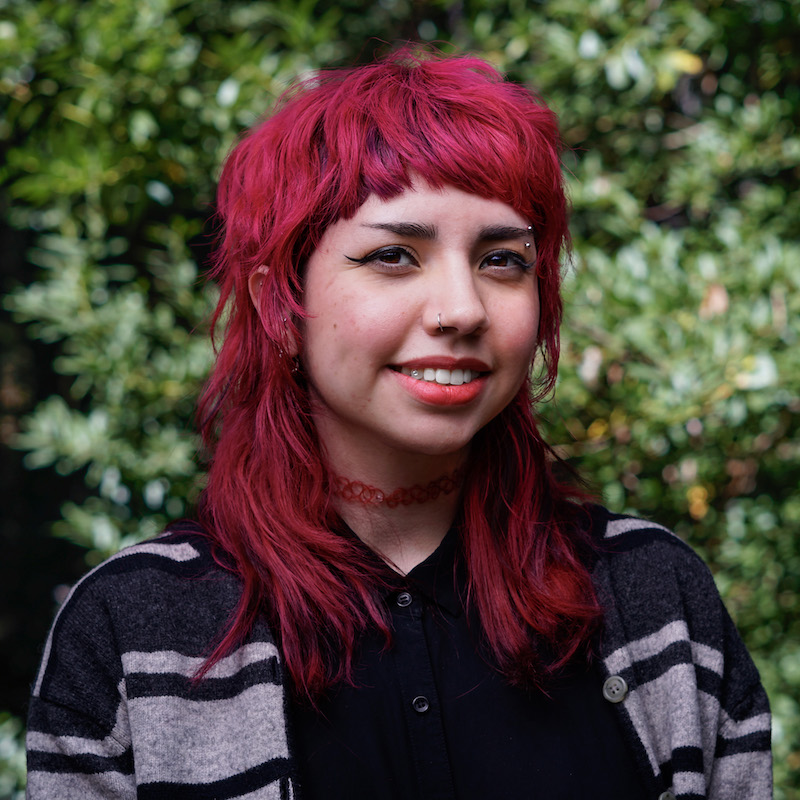
As I sat in my AP psychology class watching a video, a man on the screen held up a standard piece of printer paper. "This paper represents the human brain," he said. Then, he drew a small square on the paper: "This square represents all that we know about the human brain." It made me wonder: How could we know so little about this organ in our heads that controls our entire lives? At that moment, I decided to expand the square on that piece of paper.
Ten years and two degrees later, I found that my quest was not so simple. I became disenchanted with the minutiae of lab work, but I never fell out of love with neuroscience. Now, I'll become the person who espouses the brain's wonders, rather than the person who expands that square.
School-year internships: UC Santa Cruz news office, Seymour Marine Discovery Center, Lookout Santa Cruz
Summer internship: Science daily newsletter
Website: jasmin-galvan.com
Anna FitzGerald Guth
B.A. (English, environmental studies) Wesleyan University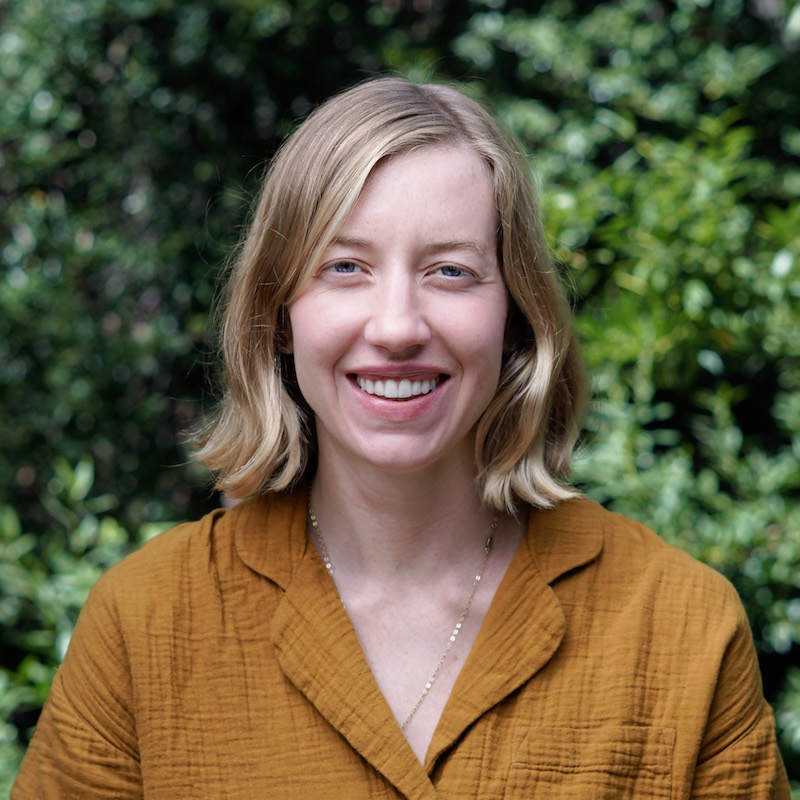 I wanted to grow up to be a farmer. I pursued this path with gusto for several years after college, learning how to grow organic vegetables in our changing climate—and getting my hands beyond dirty.
In a big twist, agriculture reminded me of journalism, which I'd tried at Berkeley High School's student newspaper. In both fields, you must become a fast expert in everything and, at the end of the day, produce something useful, digestible. Ultimately, I decided that I could personally contribute more to the creation of an ecologically sustainable, socially just future by producing stories.
I now have nearly a decade of professional experience writing about environmental, climate, and agricultural science for news outlets, nonprofits, and foundations. I aspire to write stories about science that uncover essential truths and catalyze positive change.
School-year internships: Monterey Herald, KQED Science
Summer internship: Stanford News Service
Website: annafitzgeraldguth.com
Caroline Hemphill
B.A. (biology; minor in professional writing [science communication]) University of California, Santa Barbara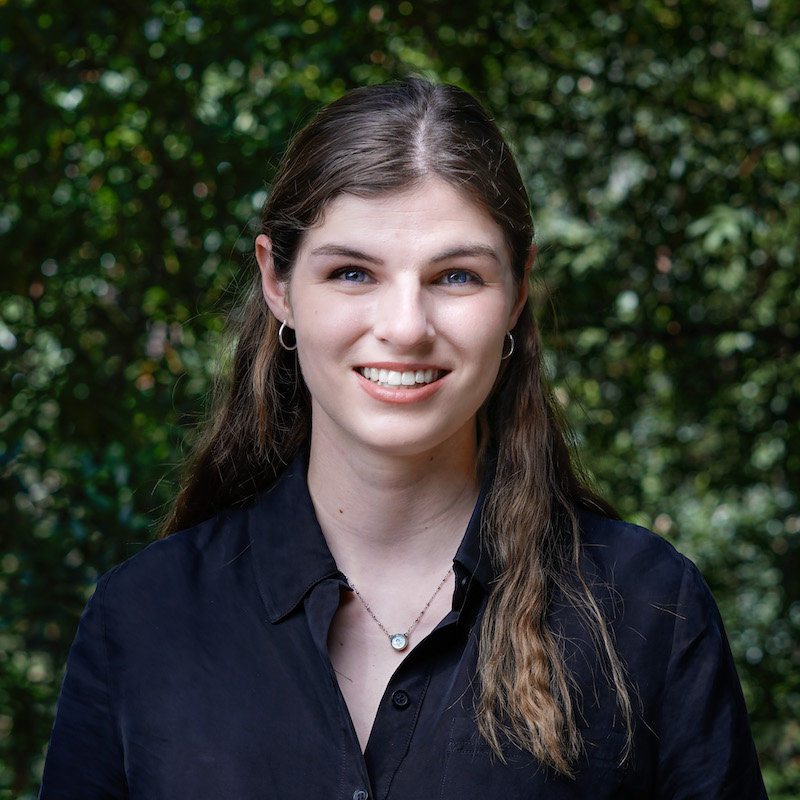 In seventh grade biology class, I peered into a microscope for the first time. I watched blood rush through a goldfish's tail with every heartbeat. I have been obsessed with life's tiniest details ever since. Studying cellular and molecular biology as an undergraduate, I learned about the minutiae of disease, allergies, and the immune system. Every detail was a revelation that helped me see the world more clearly.
I have learned that many people don't feel that same admiration. Widespread misinformation and distrust in medicine drive a wedge between people and their desire to understand their own bodies. I write to help clear the fog. I want everyone to feel empowered to make informed decisions about their health, and to feel the same awe I felt when I first looked into that microscope.
School-year internships: Stanford University School of Medicine, Monterey Herald
Summer internship: CZI Biohub
Website: cmhemphill.com
Carly Kay
B.A. (communication; minor in science communication) University of California, Santa Barbara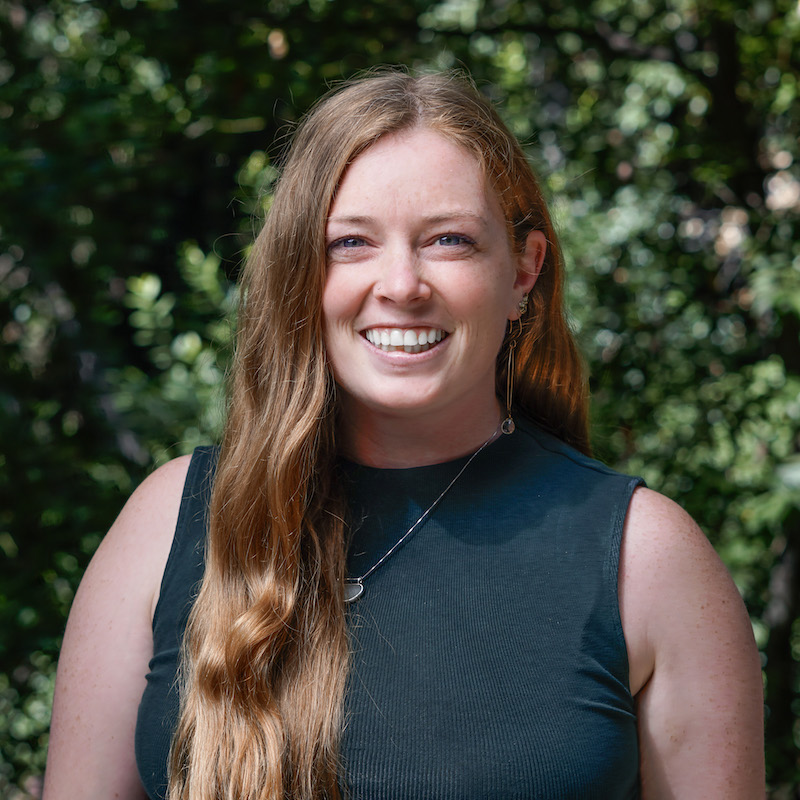
Funny story: my writing career started as a joke. And the punchline? I thought it was just a hobby. The first time I seriously committed finger pads to keys was for my university newspaper satire section. As a biology major, creative writing hit me over the head like a rubber chicken—comically unexpected.
In between constructing molecules with my 3D modeling kit and pedaling to chemistry lab, I became enamored with storytelling. But it wasn't until I conducted field research on turtles in Costa Rica that I realized good science falls flat without compelling stories.
The passion of Costa Rican conservationists showed me that sometimes, voices speak louder than scientific findings. Inspired by the people protecting our ecosystems, I want to write stories that show there is still hope for both people and the planet.
School-year internships: Lookout Santa Cruz, MIT Technology Review
Summer internship: Stanford School of Medicine
Website: carly-kay.com
Mahima Samraik
B.S. and M.S. (biology) Indian Institute of Science Education and Research, Mohali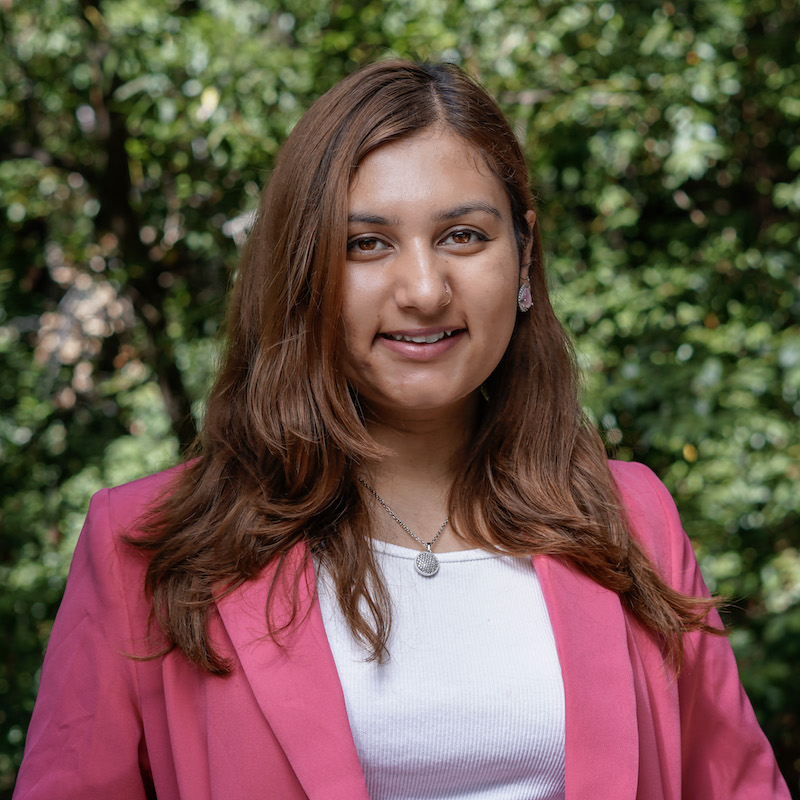
A five-year-old me ran through the snowy fields of Northern India, asking my father why snow melts when it falls. "Science holds the answer," he said with a smile. Fascinated, I embarked on a lifelong journey of curiosity and discovery in my hometown. From researching medicinal mushrooms to studying sleep patterns in fruit flies, I realized that science, while captivating, was often kept behind closed doors. When I was prevented from sharing my findings with others, I asked myself, "Is this the kind of science I want to pursue?"
That moment inspired me to champion making science accessible to all. From hosting podcasts on scientific literacy to writing about tackling misinformation, I find it empowering to educate. I live by the belief that science knows no boundaries and strive to honor that every day.
School-year internships: Multimedia internship with Ben Rein, Monterey Herald, Stanford News Service
Summer internship: Yale School of Medicine
Website: mahimasamraik.com
