What We Do
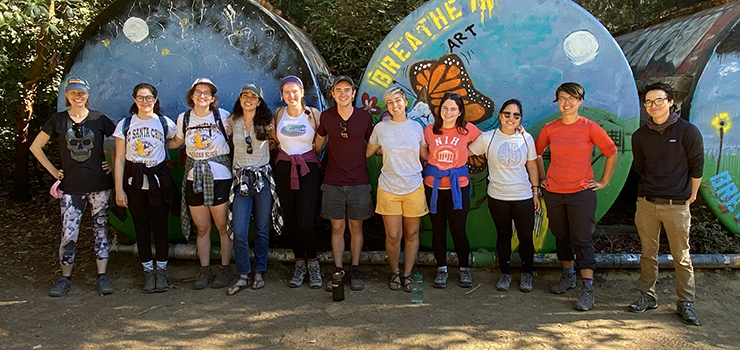
The SciCom class of 2022 (l-r): Director Erika Check Hayden, Emily Moskal, Graycen Wheeler, Elyse DeFranco, Brittney Miller, Zack Savitsky, Jude Coleman, Megan Kalomiris, McKenzie Prillaman, Guananí Gómez-Van Cortwright, Brian Phan. Photo: Robert Irion.
"The Science Communication Program is widely regarded as one of the best science writing programs in the world; we believe that reputation is well deserved. Its graduates are making strong contributions to the public understanding of science."
—from a 2006 external review of the program
The Science Communication Program bestows a master's degree. The program:
- consists of nine months of coursework and a final summer internship
- requires part-time professional internships throughout the academic year
- does not require a thesis
- offers practical training with professional journalists and editors as instructors
- emphasizes news, long-form writing, and multimedia skills, with an eye toward substantive reporting on research and policy
- features small class sizes (10 students) in every course, ensuring extensive feedback from lecturers
- stresses original writing and editing for the public, rather than theory and critique
- subjects all projects to rigorous editing at the highest standards, with some peer review by students

UC Santa Cruz, 1156 High Street, Santa Cruz, Ca 95064
©2024 Regents of the University of California. All Rights Reserved.